Precision-machined metal and
plastic components — globally sourced and program-managed. MES doesn’t just source the part.
We manage the quality, tolerances, and supply chain that deliver it.
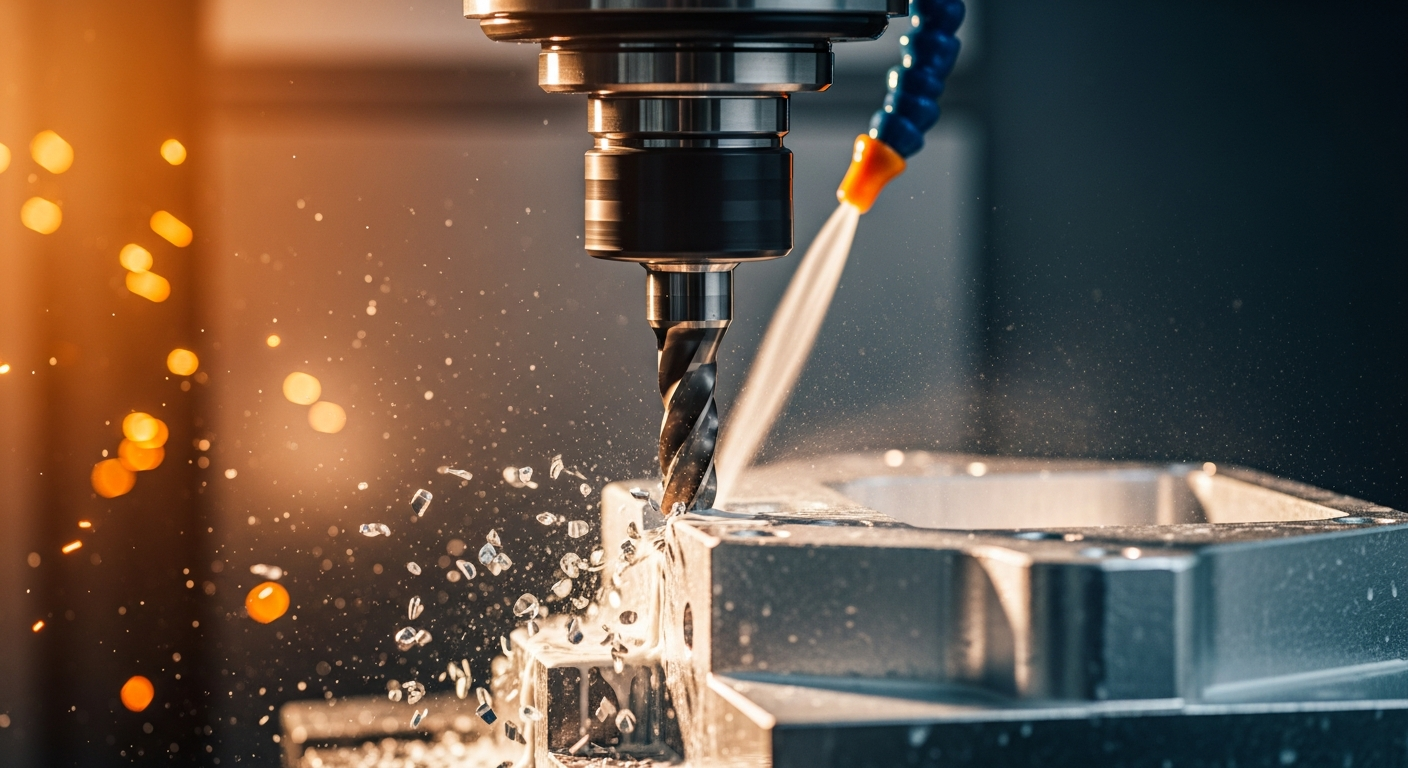
CNC machining — Computer Numerical
Control machining — is a subtractive process in which computer-controlled cutting tools
remove material from a solid workpiece to produce a precisely dimensioned metal or
plastic component. CNC programs translate CAD models into exact tool paths, delivering
highly repeatable production of complex parts to tight tolerances.
Because the same program runs
identically across thousands of cycles, CNC machining delivers the dimensional
consistency that demanding automotive, energy, and industrial programs require — from a
single prototype to volumes above 100,000.
Tolerance
To ±0.0005"
Surface finish
32 Ra to 8 Ra
& finer
Volumes
Prototype to
100,000+
+
+
+
CAD
→ CAM → CMM
AL
6061-T6
5-AXIS
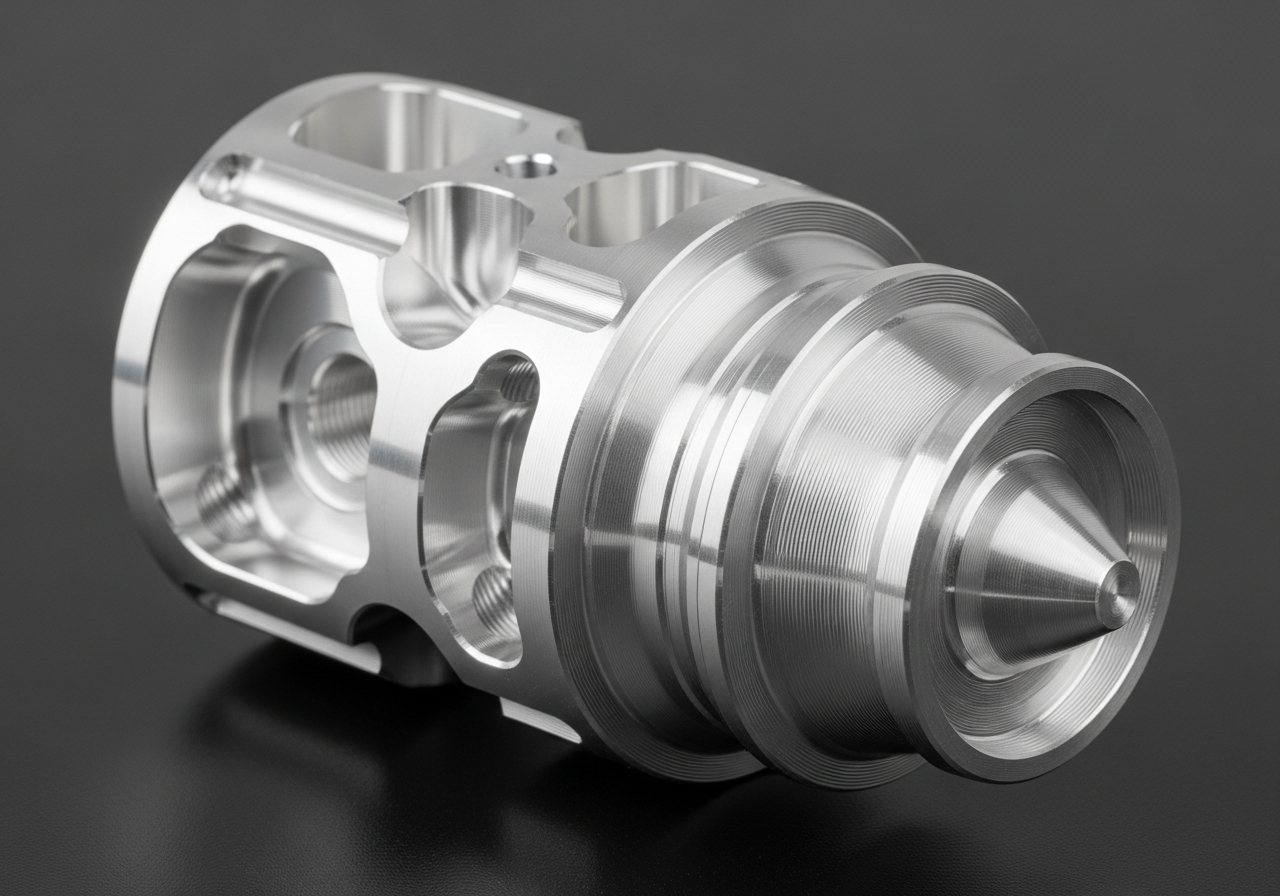
Finished
machined component
±0.0005"
CMM
verified
Every critical dimension
Capabilities
CNC processes we support
Turning
CNC Turning
The workpiece rotates against a
stationary cutting tool to produce cylindrical features — diameters, bores, threads,
grooves, and tapers.
Best
for
Rotational parts — shafts,
hubs, bushings, pins, and rollers.
Milling
CNC Milling
A rotating tool cuts a fixed workpiece to
produce prismatic features — flat faces, pockets, slots, holes, and contoured 3D
geometry across 3-, 4-, and 5-axis centers.
Best
for
Complex, multi-sided, and
tight-tolerance components.
How to choose
Use turning for rotational parts and milling for prismatic or complex geometry.
Many components need both — plus grinding, boring, drilling, and tapping. MES matches
the process, machine, and supplier to your part’s geometry, tolerance, and volume —
before the first chip is cut.
Multi-Axis &
5-Axis
5-axis machining moves the tool along five simultaneous axes, cutting complex
multi-sided features in a single setup. Fewer setups means better accuracy, shorter
cycle times, and geometries impossible on 3-axis
machines.
Materials
Materials we machine
Material selection is
driven by mechanical load, weight target, corrosion exposure, thermal requirements,
and cost — evaluated with your team during quoting, not after.
Material
class
Non-ferrous
metal
Ferrous
alloy
Specialty
metal
Polymer
Material Group
Common Grades
Applications & Properties
01
13
Al
Aluminum
6061
6063
7075
2024
Strong, lightweight, excellent
machinability and thermal conductivity.
02
26
Fe
Steel & Alloy Steel
1018
4140
4340
General-purpose through
high-strength structural applications.
03
24
Cr
Stainless Steel
303
304
316
17-4
PH
Chromium-alloyed corrosion
resistance for energy, medical, and industrial parts.
04
26
Fe
Iron
Ductile
Gray
Durable cast iron for load-bearing
components.
05
22
Ti
Specialty Metals
Titanium
Brass
Copper
Magnesium
Specialty alloys matched to
conductivity, weight, and strength requirements.
06
PL
C₆
Engineering Plastics
Delrin
(acetal)
PEEK
Nylon
UHMW
High-performance polymers for wear,
chemical, and electrical applications.
Engineering
Design & engineering support (DFM)
Our engineers support design for
manufacturability from concept through launch — reducing redesigns and hitting your
specifications the first time. Typical guidance we provide:
We flag where tolerances are
truly critical so cost isn’t spent tightening features that don’t need it.
Material selection
Balancing machinability against
mechanical, thermal, and corrosion requirements.
Feature & tool access
Designing around standard
tooling and reachable geometry to control cost and cycle time.
Threads & holes
Standard sizes and depths
reduce tooling changes and lead time.
Surface finish
Specifying finish only where
the application requires it.
First-article & CAM review
Toolpaths and first articles
verified before production release.
One partner. The
finished part.
MES manages the full component — not just the
machining. One partner delivers the finished, inspected, ready-to-install part.
Heat
treatment
Deburring
Passivation
Anodizing
Plating
Powder
coating
Laser
marking
Assembly
Leak
testing
CMM
inspection
Verified at the
source
MES embeds engineers and quality specialists
inside supplier facilities — measuring quality at every production stage, not just at
final inspection.
CMM dimensional inspection
First Article Inspection Reports (FAIR)
PPAP submission & management
In-process controls
On-site embedded engineers
IATF
16949 Certified
ISO
9001:2015 Certified
Why
MES
The MES difference
How
most suppliers manage quality
How
MES manages quality
Inspect
at the receiving dock
Verify
at the source, inside the factory
Rely on
the supplier's self-reporting
Put MES
engineers on the production floor
Discover
defects after delivery
Catch
and correct drift during the run
Hand you
the documentation to chase
Deliver
CMM, FAIR, and material certs with the order
Escalate
only when something breaks
Communicate
status proactively, every step
Every
account gets a dedicated supply chain specialist
and planner who own quality, inventory, and on-time delivery as one program.
Global
Network
Globally sourced CNC machining
MES maintains active machining
suppliers across the key manufacturing hubs of Mexico, Europe, Japan, India, China, and
Vietnam — optimizing lead time, cost, and logistics per program, and enabling China+1 strategies for customers
diversifying risk.
Nearshoring
Mexico
Metrics Works (Saltillo) + USMCA
duty-free access
EU
proximity
Europe
Precision machining, Poland hub
High-precision
Japan
High-mix, high-accuracy
capability
Cost
advantage
India
Scaling precision at competitive
cost
High-volume
China
Established capacity across all
part sizes
Diversification
Vietnam
Tariff-diversified supply
resilience
6 countries
—
nearshore and global machining capacity, managed as one network
Saltillo, MX
Spotlight
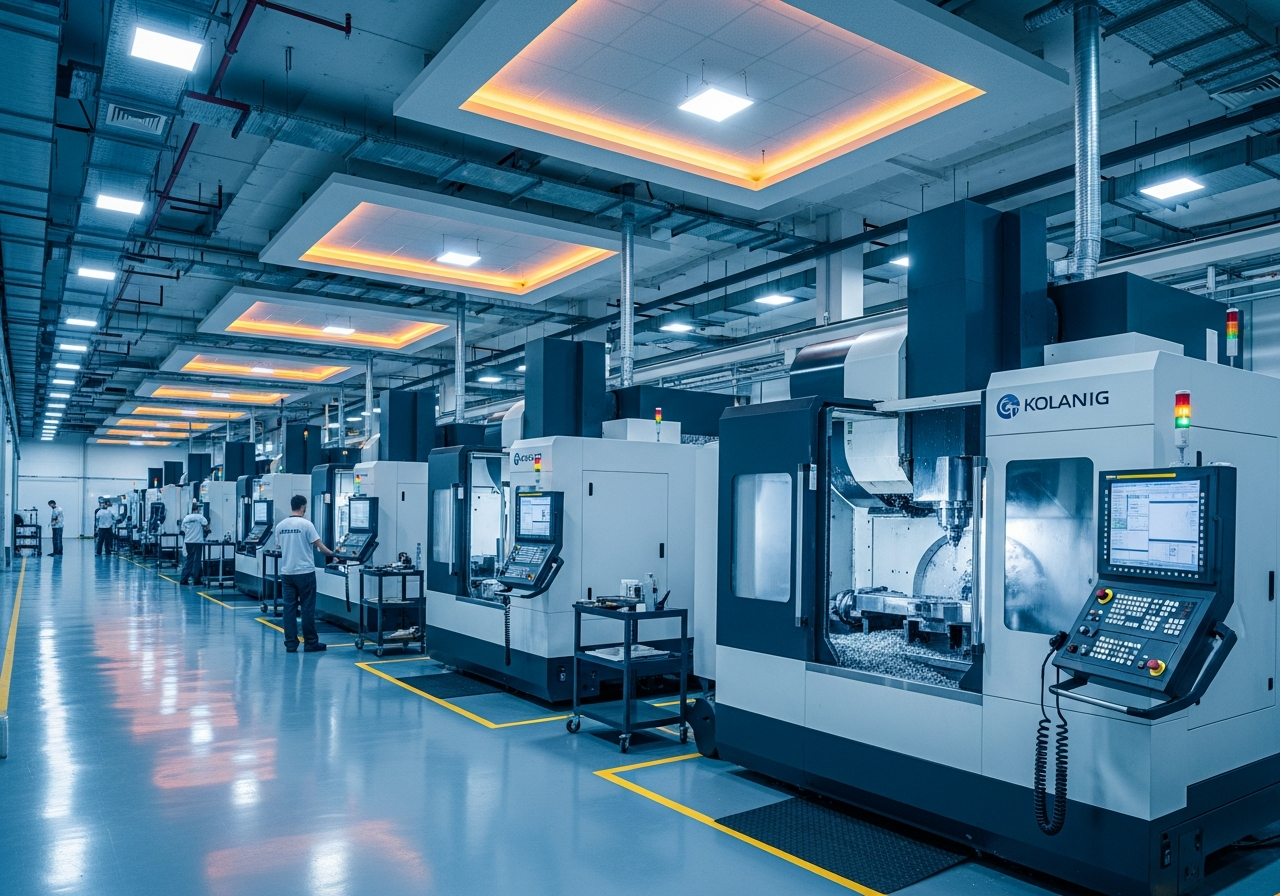
Nearshore machining in Saltillo, Mexico
MES operates its own capacity —
Metrics Works, a company-operated machining facility in Saltillo, Coahuila, at the heart
of Mexico’s largest automotive cluster. It gives North American OEMs a nearshore
alternative to overseas machining: shorter lead times, simpler ground-freight logistics,
USMCA-aligned sourcing, and time-zone-aligned engineering.
CNC turning
rotates the workpiece against a stationary tool to create cylindrical features —
diameters, bores, threads, and tapers — ideal for shafts, hubs, and pins. CNC
milling moves a rotating tool against a fixed workpiece to create prismatic features
such as flat surfaces, pockets, slots, and 3D contours. Many components require
both.
For automotive
programs, MES sources through IATF 16949-certified supplier facilities and supports
the full automotive quality chain — PPAP, control plans, FMEA, and material
certifications — to meet OEM and Tier-1 requirements. MES has held ISO 9001:2015
certification since 2009.
Yes. MES
operates Metrics Works, a company-operated machining facility in Saltillo, Coahuila
— in Mexico’s largest automotive cluster — offering shorter lead times, simpler
logistics, USMCA-aligned sourcing, and time-zone-aligned engineering support.
Standard
tolerances are typically ±0.001″ (±0.025 mm); tight-tolerance features can be held
to ±0.0005″ (±0.013 mm) or better. Surface finishes range to 32 Ra or finer, with
critical dimensions verified at the source using CMM before parts ship.
Aluminum
(6061, 7075), carbon and alloy steels (1018, 4140, 4340), stainless steels (304,
316, 17-4 PH), ductile and gray iron, brass, copper, magnesium, titanium, and
engineering plastics including Delrin, PEEK, nylon, and UHMW.
MES embeds
quality engineers inside partner facilities. Dimensional accuracy is verified
against your drawing with CMM equipment, first article reports are reviewed, and
critical features are confirmed before parts ship — not discovered at your dock.
Prototypes are
often 1–3 weeks; production orders typically 4–10 weeks. Nearshore capacity at
Metrics Works and warehousing near your facility can significantly compress
replenishment lead times.
RFQ //
ENGINEERING REVIEW
Ready to optimize your supply chain?
Send us
your CAD files. Our engineers review your requirements, optimize the
manufacturing process, and return a global sourcing quote.